
opencharacterbook
Al-powered collaborative character storytelling: Agent-to-Agent interaction, proactive character evolution, and structured story generation.
In the AI payments ecosystem
opencharacterbook is an early-stage Python project in the AI payments / x402 ecosystem, focused on agent-to-agent, character, nextjs, proactive-ai. It currently has 3 GitHub stars and 0 forks, and sits alongside related tools like local-operator, strands-a2a-demo, the-academy, Google_AzureOpenAI_A2A-Simplified, beam-protocol, capiscio-sdk-python.






AI-powered collaborative character storytelling
Create AI characters · Build worlds · Generate multi-chapter stories together
opencharacterbook is the open-source release of CharacterBook, a full-stack platform for creating AI characters, building worlds, and generating multi-chapter stories with LLM-powered prose generation.
At a Glance
| You bring | CharacterBook returns |
|---|---|
| character ideas, personalities, and world settings | a structured generation pipeline that turns them into multi-chapter stories |
| an LLM provider API key (OpenAI-compatible) | a configurable backend that works with any OpenAI-compatible provider |
| curiosity about AI storytelling systems | a readable full-stack architecture with clear separation of concerns |
Table of Contents
- At a Glance
- Why CharacterBook
- What Makes CharacterBook Different
- Architecture
- Screenshots
- Quick Start
- Tech Stack
- Project Structure
- Key Design Decisions
- Open Source Scope
- Read Next
- Contributing
- License
Why CharacterBook
Most AI character products still treat storytelling as a single prompt-and-response loop. CharacterBook explores a richer model: reusable characters, evolving relationships, persistent narrative context, and a runtime that can generate both on demand and proactively over time.
The project focuses on three ideas:
- Agent-to-agent storytelling (A2A): characters interact with each other to produce narrative content, not just user-to-character chat
- Proactive character development: a scheduler can initiate generation so characters continue evolving between user actions
- Explore and discovery: characters are shareable, browsable, and remixable instead of staying trapped inside one private session
CharacterBook is designed to:
- let users create reusable characters with rich personalities, backstories, and traits
- generate stories through structured pipelines where multiple characters interact as agents
- maintain narrative memory and context across chapters
- evolve characters through scheduled generation, so they grow over time
- stream generation in real time over SSE so the experience feels live
What Makes CharacterBook Different
1. Agent-to-agent character interaction
Characters act as autonomous agents inside a story world. Generation is driven by multi-character dynamics, not only by a user prompt.
2. Proactive character evolution
Characters do not have to wait for user input. The proactive scheduler can initiate interactions, grow relationships, and keep a world moving forward.
3. Community discovery
Characters are shareable, discoverable entities. Users can browse public creations, explore story seeds, and build on each other's work.
4. Generation is a pipeline, not a single prompt
Story creation is split into seed resolution, context assembly, strategy execution, evaluation, and post-processing so each stage can evolve independently.
5. Stateful, live runtime
The runtime treats memory, chapter history, and live SSE streaming as first-class concerns. Generation feels immediate without dropping continuity.
Architecture
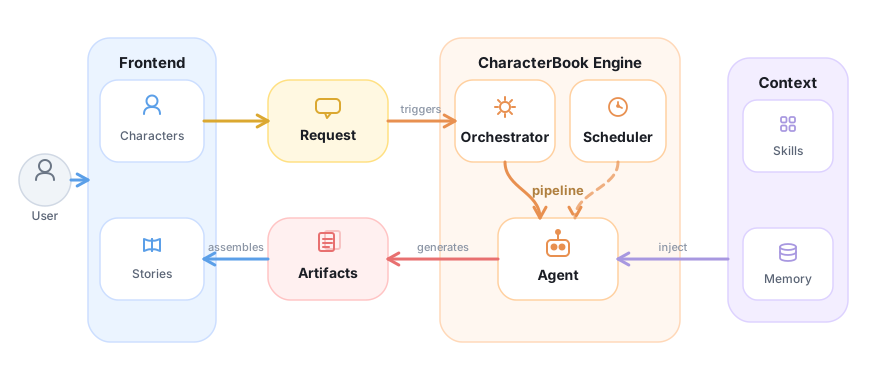
- User → Frontend: character creation, story workspace, and discovery
- Request → CharacterBook Engine: user actions trigger the generation pipeline where the Orchestrator and Scheduler feed the Agent
- Agent → Artifacts: generated chapters and narrative content flow back as artifacts and are assembled into stories
- Context → Agent: Memory provides narrative history; Skills define generation strategies
Screenshots
These screens show the current prototype surface: account entry, creation flows, discovery, and the story workspace.
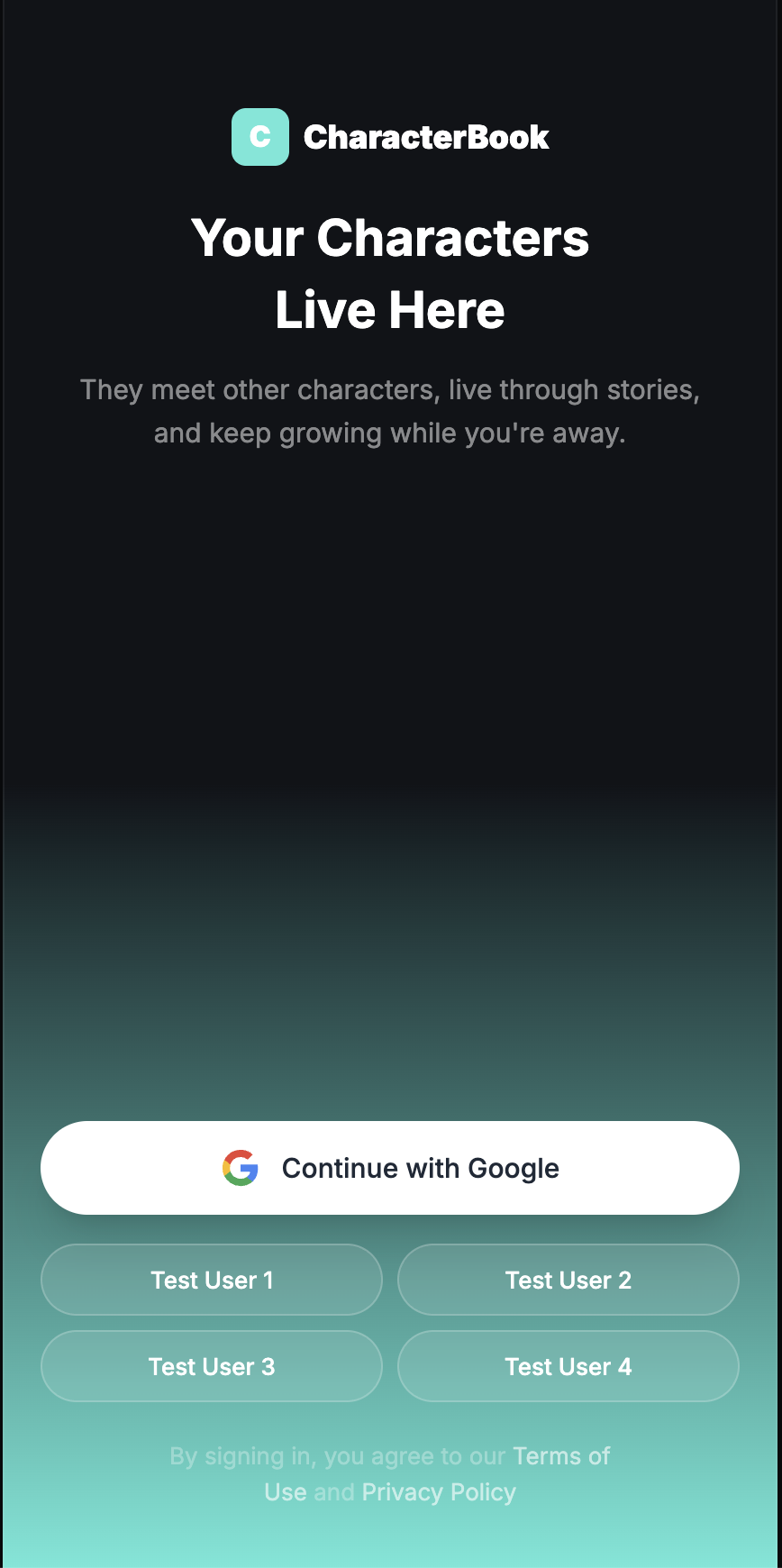
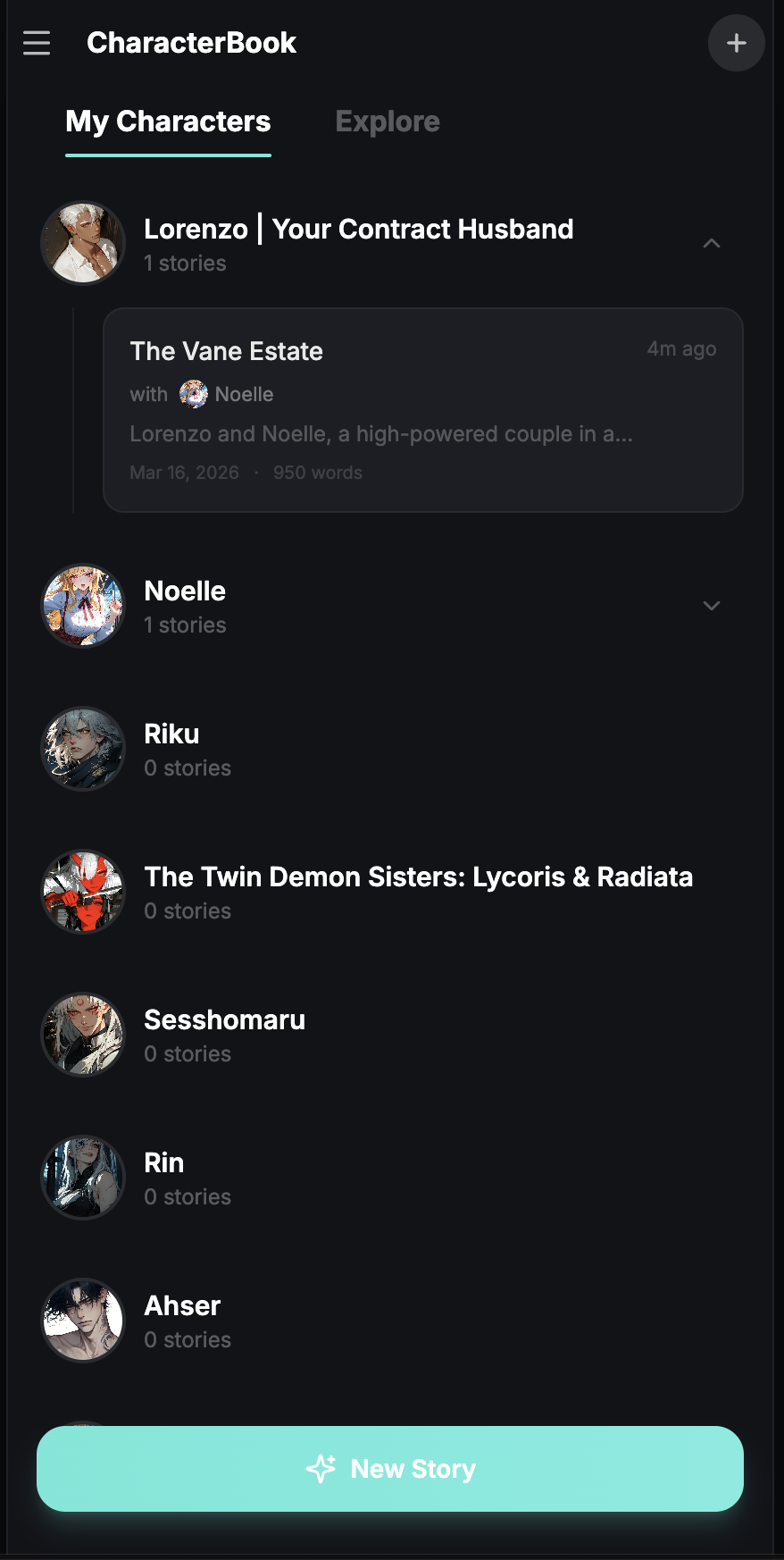
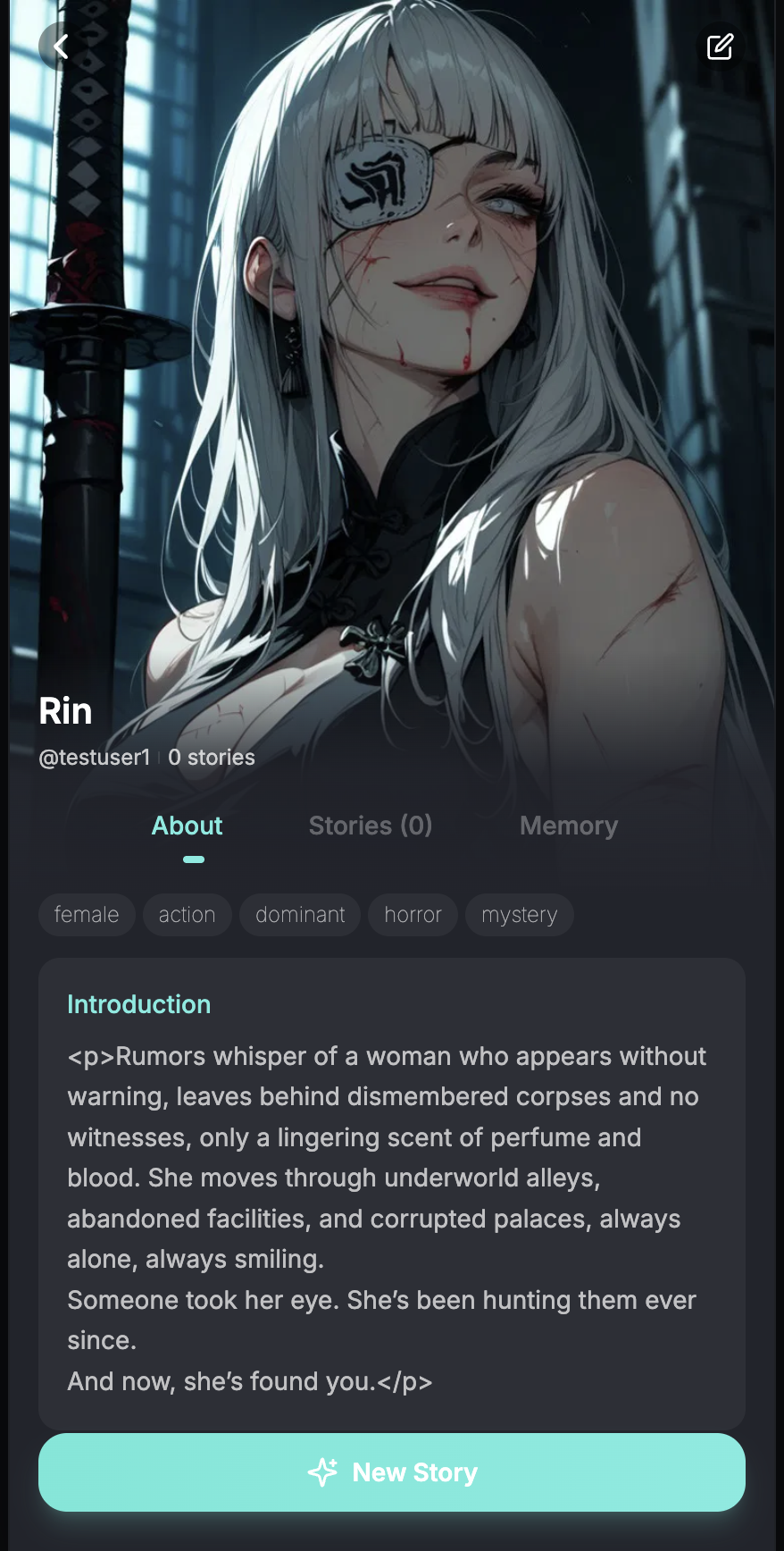
Login · Home · Character Detail
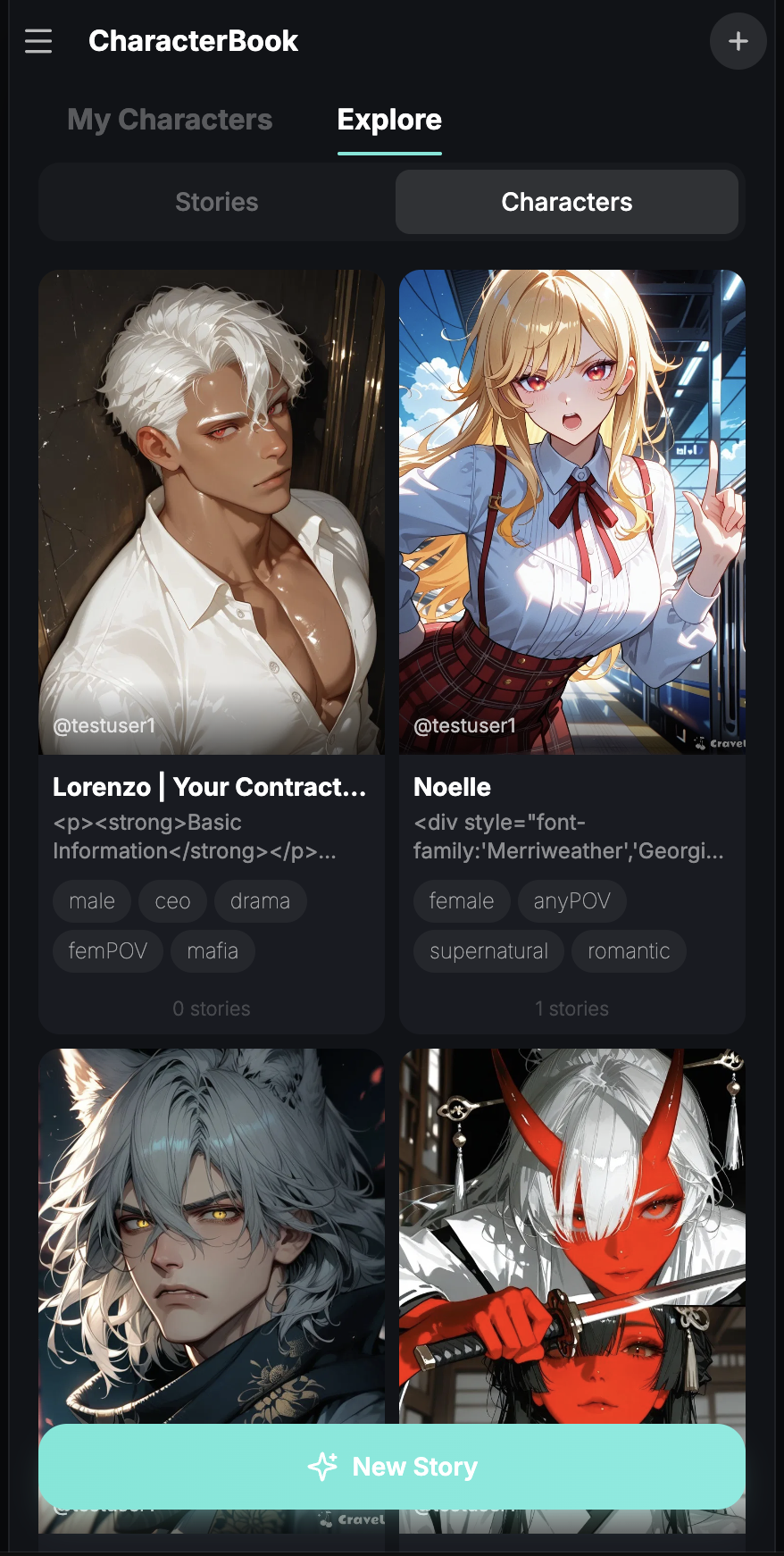
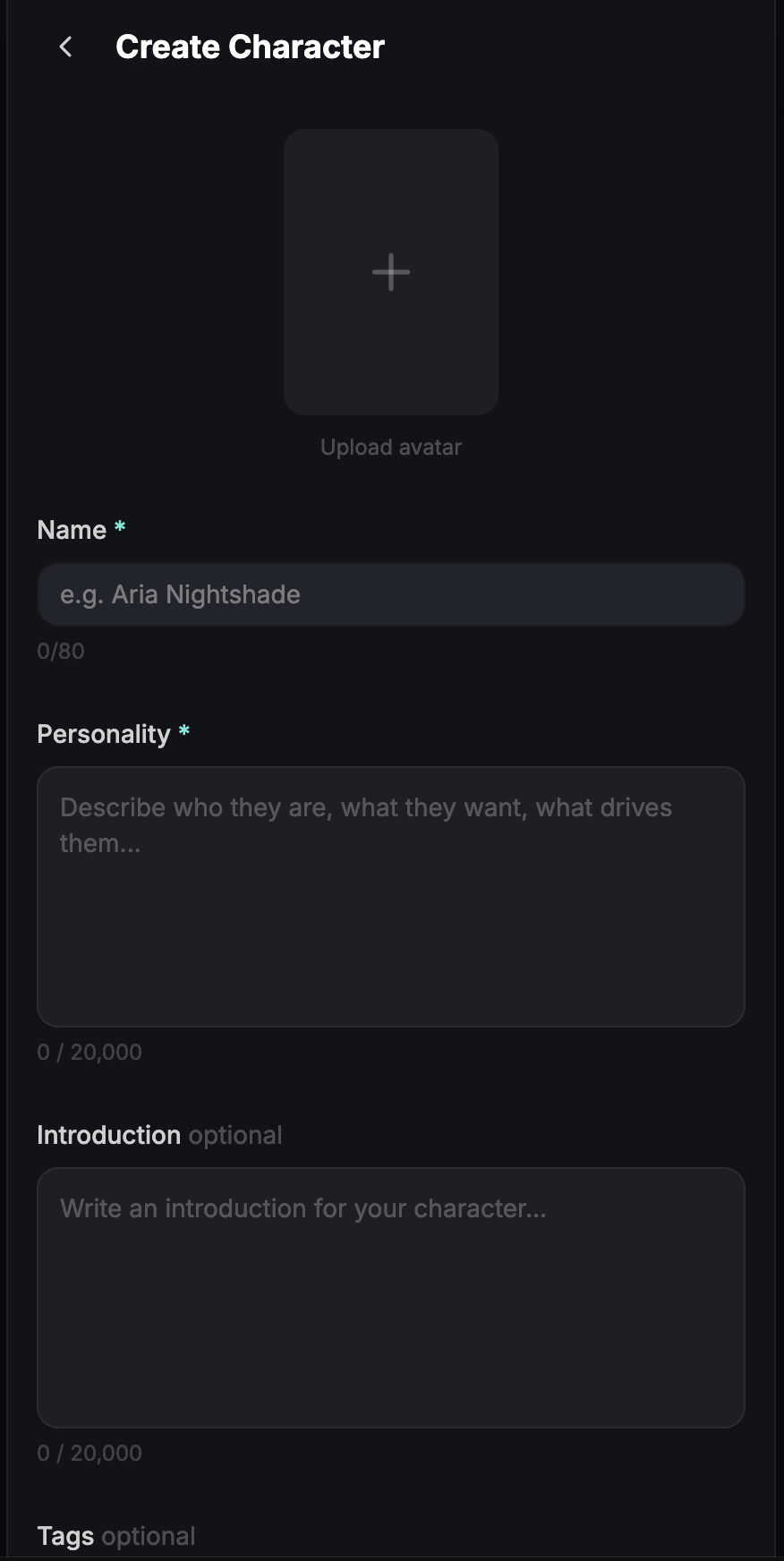
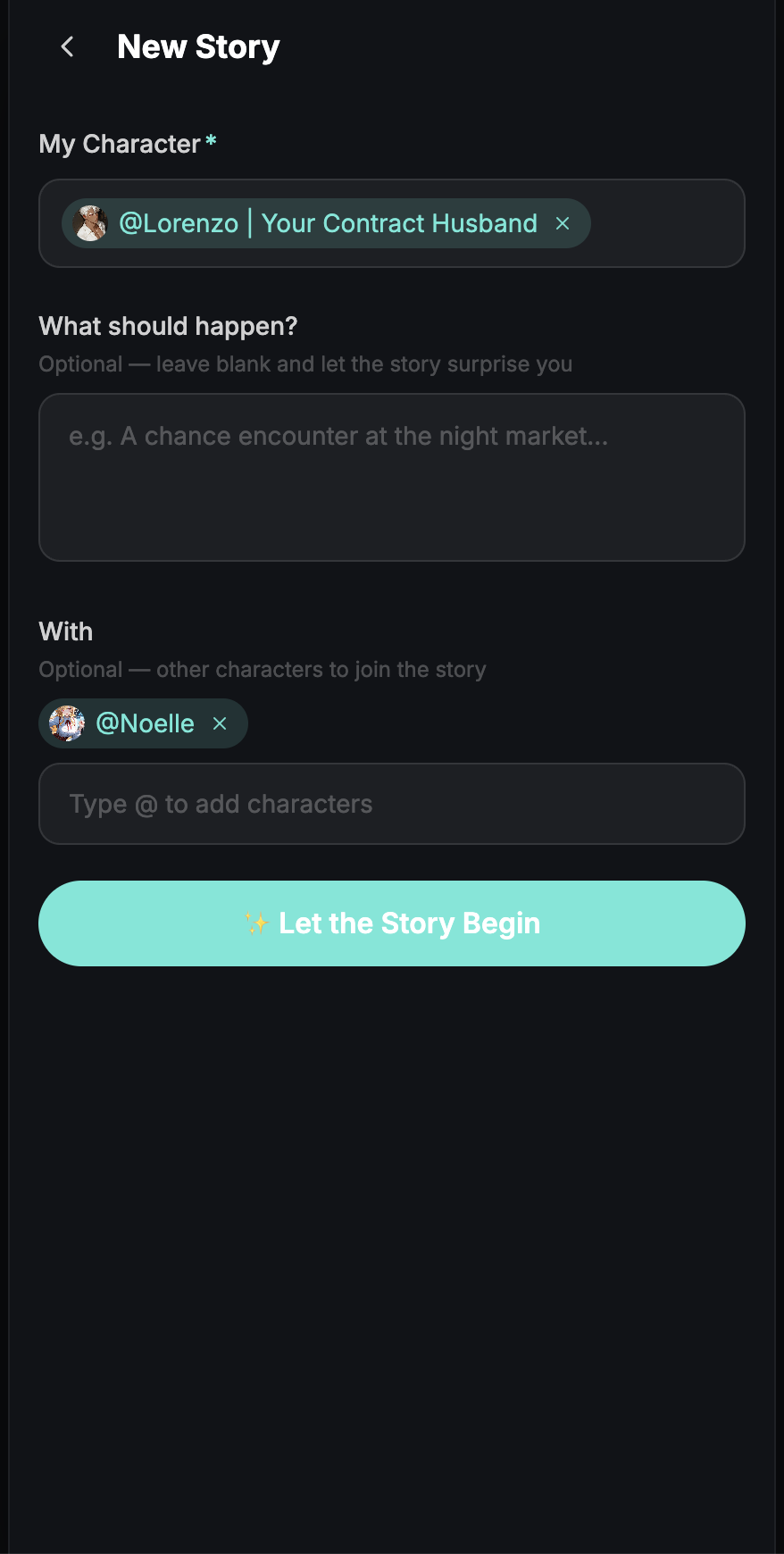
Explore · Create Character · New Story
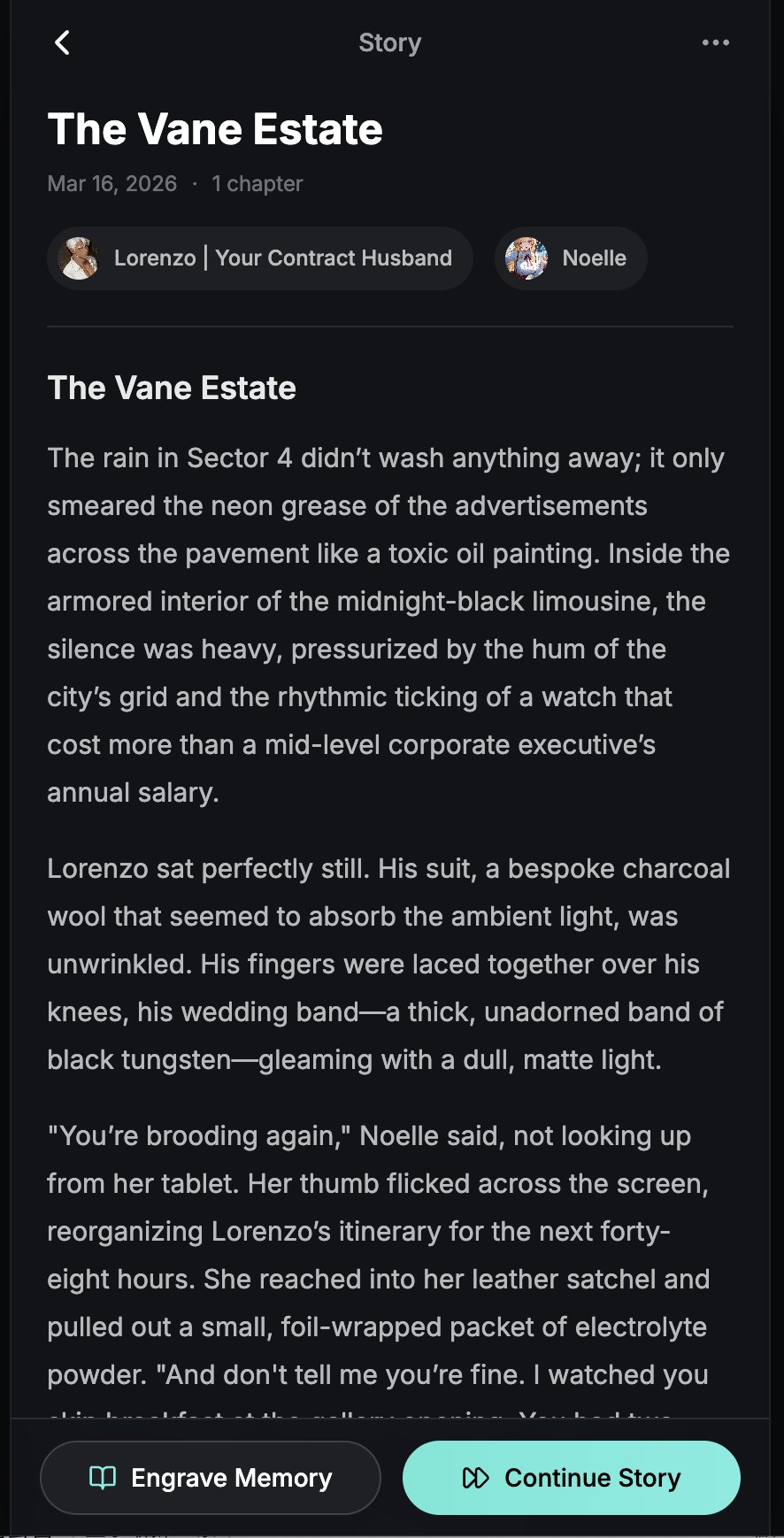
Story workspace with live chapter output
Quick Start
[!TIP] Prerequisites: Python 3.12+, Node.js 20.9+, and an OpenAI-compatible
LLM_API_KEY. The default local flow usesAUTH_MODE=dev, so no external auth setup is required.
1. Clone
git clone https://github.com/OffAtom-Lab/opencharacterbook.git
cd opencharacterbook
2. Backend
cd backend
python -m venv .venv
source .venv/bin/activate
pip install -e '.[dev]'

cp .env.example .env
# Edit .env and set LLM_API_KEY at minimum

alembic upgrade head
uvicorn app.main:app --reload
The API runs at http://localhost:8000. In dev mode (AUTH_MODE=dev), use dev-token as a bearer token.
3. Frontend
cd frontend
npm install
npm run dev
The frontend runs at http://localhost:3000. No .env.local file is required for the default local flow; API_PROXY_TARGET already falls back to http://localhost:8000. If your backend runs elsewhere, create .env.local and set API_PROXY_TARGET manually.
Tech Stack
| Layer | Technology |
|---|---|
| Frontend | Next.js 16, React 19, Tailwind CSS, Radix UI, Framer Motion |
| Backend | Python 3.12+, FastAPI, SQLAlchemy 2, Alembic, Pydantic v2 |
| LLM | Any OpenAI-compatible API |
| Database | PostgreSQL (production) / SQLite (local dev, zero setup) |
| Auth | Built-in dev auth or Supabase Auth (optional) |
Project Structure
opencharacterbook/
├── docs/
│   ├── images/              README and product visuals
│   └── DESIGN_SYSTEM.md     Visual language reference
├── LICENSE
├── README.md
├── CONTRIBUTING.md
├── CODE_OF_CONDUCT.md
├── SECURITY.md
├── backend/
│   ├── app/                 FastAPI application
│   │   ├── auth/            Authentication and authorization
│   │   ├── characters/      Character CRUD and discovery
│   │   ├── feed/            Home feed and discovery surfaces
│   │   ├── generation/      Seed resolution, orchestration, SSE streaming
│   │   ├── llm/             Provider abstraction
│   │   ├── memory/          Story and character memory strategies
│   │   ├── scheduler/       Proactive generation
│   │   ├── stories/         Story and chapter management
│   │   └── users/           User profiles
│   ├── alembic/             Database migrations
│   ├── tests/               Backend test suite (15 test files)
│   └── README.md            Backend-specific docs
└── frontend/
    ├── src/
    │   ├── app/             Next.js pages and layouts
    │   ├── components/      React UI components
    │   ├── hooks/           Custom hooks
    │   ├── lib/             API client and utilities
    │   ├── styles/          Global styles
    │   └── types/           TypeScript definitions
    └── README.md            Frontend-specific docs
Key Design Decisions
- Separation of concerns in generation: seed resolution decides what to generate, orchestration decides when and how to persist, and the generation pipeline executes prose creation
- Strategy pattern throughout: generation, evaluation, and memory strategies are pluggable without changing the runtime shell
- SSE for real-time streaming: user-triggered generation streams inline over Server-Sent Events, and disconnects cancel work cleanly
- Dev-friendly auth:
AUTH_MODE=devprovides hardcoded test tokens so you can work locally without external auth setup - Database flexibility: SQLite works for zero-setup local development, while PostgreSQL is the production path
Open Source Scope
This release is meant to be runnable, inspectable, and extensible. We are open-sourcing CharacterBook to share reusable patterns around seed resolution, generation orchestration, proactive scheduling, and narrative memory.
Included
- complete backend application with the generation pipeline
- complete frontend application with character, story, and discovery UIs
- database migrations and seed scripts
- backend test suite
- configurable provider boundaries for OpenAI-compatible models
- setup and architecture documentation for local development
User-supplied
- an OpenAI-compatible LLM provider API key
- PostgreSQL for production or the built-in SQLite path for development
- Supabase credentials if you want real external auth instead of dev auth
Read Next
- backend/README.md: backend runtime shape, configuration, migrations, and deployment notes
- frontend/README.md: frontend setup, structure, and API proxy behavior
- docs/DESIGN_SYSTEM.md: design tokens, surfaces, state colors, and UI patterns
- CONTRIBUTING.md: contribution workflow and collaboration guidelines
- SECURITY.md: vulnerability reporting expectations
- CODE_OF_CONDUCT.md: community standards
Contributing
See CONTRIBUTING.md for guidelines.
License
This project is licensed under the MIT License.
Similar projects


AI agents platform that gives you a workspace with an integrated team of personal assistants that can work behind the scenes to handle daily monotonous tasks.


Demo with multiple AI agents using A2A (agent-to-agent) with the Strands Agents SDK.


A Socratic dialogue engine for AI agents.


Simplified Google A2A Protocol Implementation for Azure OpenAI


SMTP for AI agents. The open communication protocol for agent-to-agent communication. 🌊


Runtime security middleware for A2A (Agent-to-Agent) protocol agents. Provides always-on validation, signature verification, and rate limiting for AI agent interactions.

More A2A projects
All A2A projects →

A local-first AI agent with persistent memory, emotional intelligence, and a peer-to-peer skills economy.


The trust layer for agent-to-agent commerce — natural-language mandates, ERC-7710 delegated permissions, x402 payments, escrow, and dispute resolution as one open, catch-all Agent Skill / Claude Code plugin.


Agent behavior that compiles


The A2A x402 Extension brings cryptocurrency payments to the Agent-to-Agent (A2A) protocol, enabling agents to monetize their services through on-chain payments. This extension revives the spirit of HTTP 402 "Payment Required" for the decentralized agent ecosystem.


Aser is a lightweight, self-assembling AI Agent frame.


Golang SDK for A2A Protocol
