The problem AP2 solves
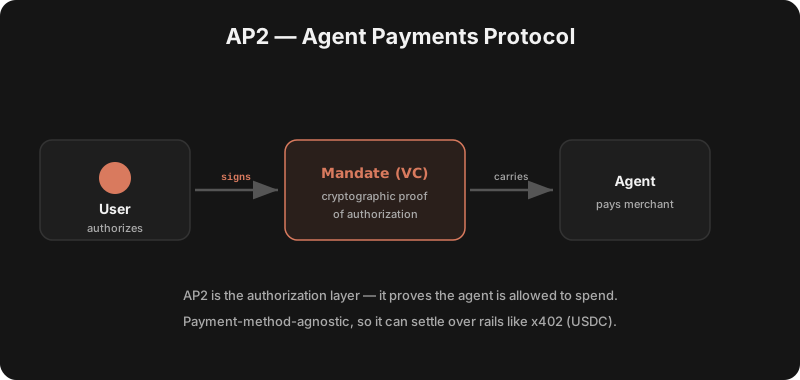
When an AI agent buys something for you, two hard questions appear: did the user actually authorize this? and how does the merchant trust that? Traditional checkout assumes a human is clicking the button. Agentic commerce breaks that assumption. AP2 answers it with verifiable mandates — signed authorizations that travel with the transaction.
How AP2 works
AP2 is built as an extension to Google's Agent-to-Agent (A2A) protocol. A user delegates authority to an agent through a signed mandate that can be scoped (a specific item, a price ceiling, a time window). When the agent transacts, it presents the mandate, giving merchants and payment providers a verifiable consent trail. AP2 is payment-method agnostic: the same authorization layer can settle over cards, bank rails, or stablecoins.
AP2, A2A and x402 together
These are layers, not rivals. x402 handles instant per-request stablecoin settlement over HTTP. A2A handles agent-to-agent messaging and negotiation. AP2 adds the authorization layer on top. The A2A x402 extension stitches them together so an AP2 agent can settle a deal in USDC. For the full stack, read our x402 + A2A + AP2 payment stack guide.