The idea
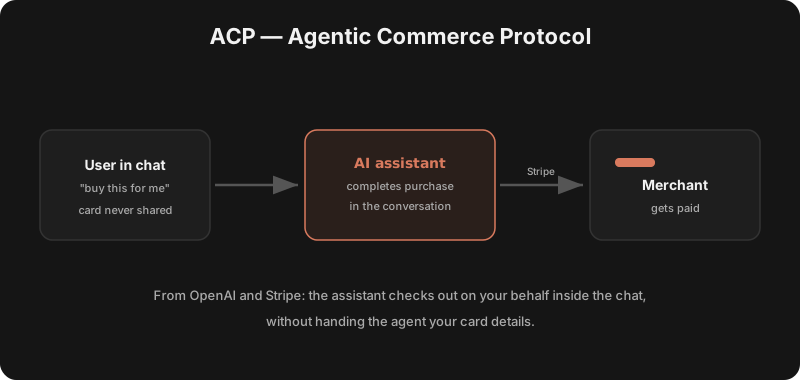
Agentic commerce is the shift from people clicking buy buttons to AI agents completing purchases. ACP is the protocol that makes that checkout work safely: the assistant discovers products, builds the cart, and triggers payment, while the merchant still charges the customer and owns the relationship.
How ACP works
ACP standardizes three things: a product feed the assistant can read, a checkout session the assistant can drive, and a delegated payment so the merchant can charge without the agent touching raw card data. In the reference implementation, that delegation uses Stripe's Shared Payment Token. The result: a user can say “buy this” in ChatGPT and have it settle through the merchant's normal Stripe flow.
Where ACP fits
ACP is one of three protocols defining the agentic payments landscape, alongside Google's AP2 and Coinbase's x402. ACP leans toward conversational retail checkout on card rails; AP2 toward cross-rail authorization; x402 toward instant stablecoin micropayments for APIs and agents. For how they stack up, see our protocol comparison.