
ws402
WS402 extends the X402 protocol to WebSocket connections, enabling true pay-as-you-go pricing for streaming resources. Users pay upfront for estimated usage, the backend tracks actual consumption in real-time, and unused balance is automatically refunded when the session ends.
In the AI payments ecosystem
ws402 is an early-stage TypeScript project in the AI payments / x402 ecosystem, focused on agents, base, ia, x402. It currently has 5 GitHub stars and 1 forks, and sits alongside related tools like pinion-os, x402-deploy, Agent-Layer, pinion-os, mcp-client, daydreams.
WS402
WebSocket implementation of X402 protocol for pay-as-you-go digital resources with automatic refunds


Overview
WS402 extends the X402 protocol to WebSocket connections, enabling true pay-as-you-go pricing for streaming resources. Users pay upfront for estimated usage, the backend tracks actual consumption in real-time, and unused balance is automatically refunded when the session ends.
Perfect for:
- 🎥 Video/audio streaming
- 🔌 API access with metered billing
- 📊 Real-time data feeds
- ☁️ Cloud computing resources
- 🤖 AI model inference
- 🎮 Gaming servers
- 🔐 VPN services
Features
- ✅ Automatic refunds - Users only pay for what they actually consume
- ⚡ Real-time metering - Track usage by time, bytes, or custom metrics
- 🔒 Payment verification - Built-in blockchain payment verification
- 🌐 Multi-blockchain support - Base, Solana, and custom providers
- 🏦 Centralized gateway - Optional proxy architecture for enterprise
- 📊 Usage tracking - Detailed session metrics and callbacks
- 🎯 Simple integration - Similar to X402, easy to add to existing apps
- 🔌 Payment provider agnostic - Works with any payment system
Installation
npm install ws402
Additional dependencies for blockchain providers:
# For Base blockchain
npm install ethers

# For Solana blockchain
npm install @solana/web3.js @solana/pay bignumber.js
Quick Start
Basic Server (Mock Provider)
const express = require('express');
const http = require('http');
const WebSocket = require('ws');
const { WS402, MockPaymentProvider } = require('ws402');

const app = express();
const server = http.createServer(app);
const wss = new WebSocket.Server({ server });

// Initialize payment provider (mock for development)
const paymentProvider = new MockPaymentProvider();

// Create WS402 instance
const ws402 = new WS402(
  {
    updateInterval: 3000,      // Send updates every 3 seconds
    pricePerSecond: 10,        // Price per second in wei
    currency: 'wei',
    maxSessionDuration: 600,   // Max 10 minutes per session

    onPaymentVerified: (session) => {
      console.log(`✅ Payment verified: ${session.sessionId}`);
    },

    onRefundIssued: (session, refund) => {
      console.log(`💰 Refund issued: ${refund.amount} wei`);
    },

    onSessionEnd: (session) => {
      console.log(`🔚 Session ended: ${session.sessionId}`);
    },
  },
  paymentProvider
);

// Attach to WebSocket server
ws402.attach(wss);

// Serve WS402 schema
app.get('/ws402/schema/:resourceId', (req, res) => {
  const schema = ws402.generateSchema(
    req.params.resourceId,
    300 // estimated duration in seconds
  );
  res.json(schema);
});

server.listen(4028);
Client Integration
// 1. Fetch WS402 schema
const response = await fetch('/ws402/schema/my-resource?duration=300');
const schema = await response.json();

// 2. Make payment (using blockchain or other method)
// ... payment process ...

// 3. Connect to WebSocket
const ws = new WebSocket(`wss://your-server.com?userId=alice`);

// 4. Send payment proof
ws.onopen = () => {
  ws.send(JSON.stringify({
    type: 'payment_proof',
    proof: {
      txHash: '0x123...', // Blockchain transaction hash
      reference: schema.paymentDetails.reference,
      senderAddress: '0xYourAddress...',
      amount: schema.pricing.totalPrice,
    }
  }));
};

// 5. Receive usage updates
ws.onmessage = (event) => {
  const data = JSON.parse(event.data);

  if (data.type === 'session_started') {
    console.log('✅ Session active!', data.sessionId);
  }

  if (data.type === 'usage_update') {
    console.log(`⏱️  Time: ${data.elapsedSeconds}s`);
    console.log(`💰 Remaining: ${data.remainingBalance} wei`);
  }

  if (data.type === 'balance_exhausted') {
    console.log('⚠️  Balance exhausted');
  }
};

// 6. Disconnect to trigger automatic refund
ws.close();
Payment Providers
WS402 supports multiple payment architectures:
1. Base Blockchain (Direct Integration)
const { WS402, BasePaymentProvider } = require('ws402');

const baseProvider = new BasePaymentProvider({
  rpcEndpoint: 'https://mainnet.base.org',
  merchantWallet: '0xYourWalletAddress',
  merchantPrivateKey: process.env.MERCHANT_PRIVATE_KEY, // For automatic refunds
  network: 'base', // 'base' | 'base-goerli' | 'base-sepolia'
  autoRefund: true,
});

const ws402 = new WS402(config, baseProvider);
Features:
- ✅ Native ETH payments on Base L2
- ✅ ERC20 token support
- ✅ ~$0.01 transaction fees
- ✅ 2-5 second confirmations
- ✅ Automatic on-chain refunds
2. Solana Blockchain (Direct Integration)
The Solana Payment Provider enables ultra-fast, low-cost payments on the Solana blockchain with automatic refunds.
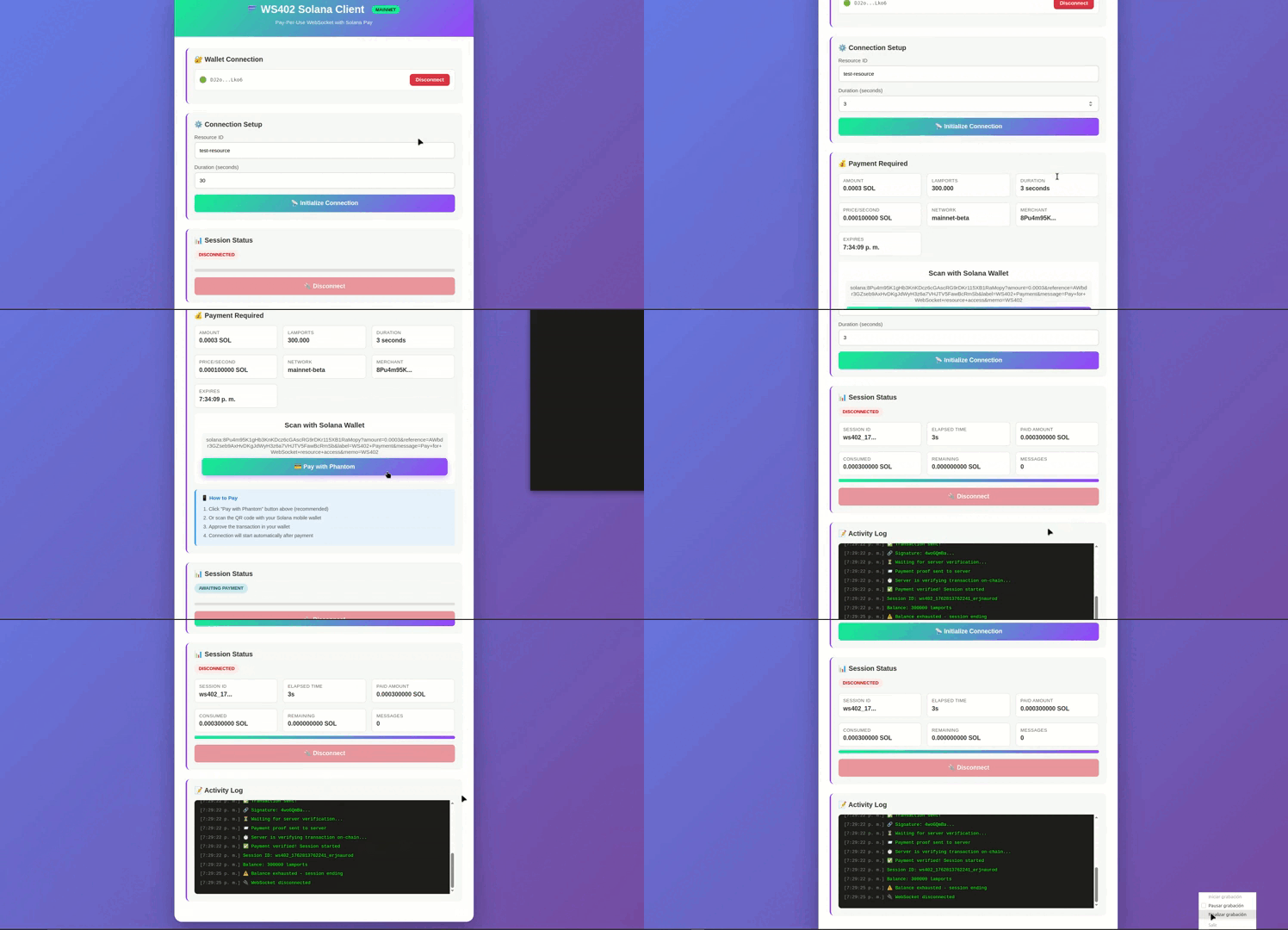
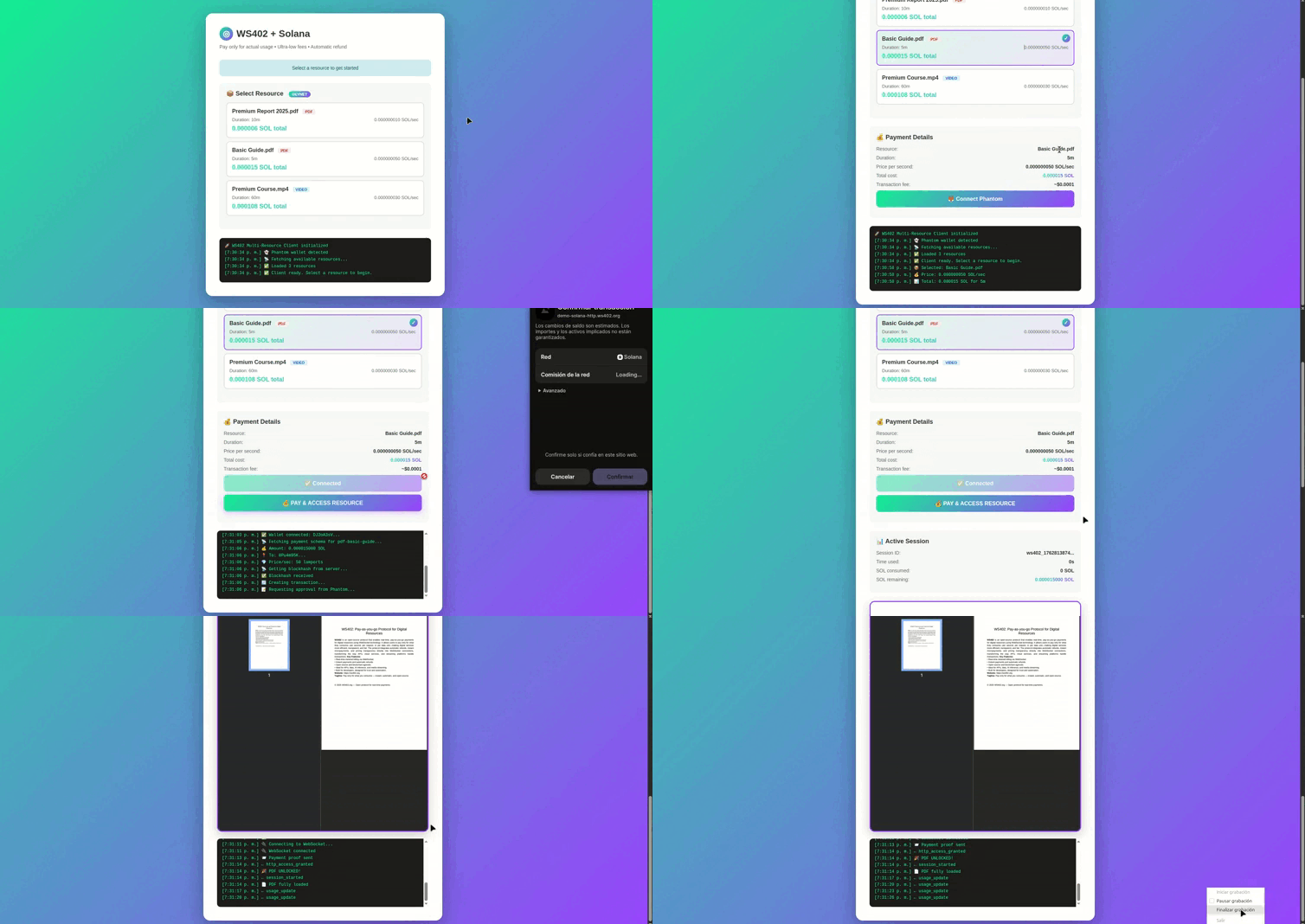
🎬 See it in Action
WebSocket Real-Time Streaming
HTTP Resource Protection
Quick Setup
const { WS402, SolanaPaymentProvider } = require('ws402');

const solanaProvider = new SolanaPaymentProvider({
  rpcEndpoint: 'https://api.mainnet-beta.solana.com',
  merchantWallet: 'YourSolanaPublicKey',
  merchantPrivateKey: [1, 2, 3, ...], // Array from wallet JSON
  network: 'mainnet-beta',
  conversionRate: 1, // 1:1 lamports
  label: 'WS402 Payment',
  message: 'Pay for WebSocket access',
  autoRefund: true,
});

const ws402 = new WS402(config, solanaProvider);
Configuration Options
interface SolanaPaymentProviderConfig {
  // Required
  rpcEndpoint: string;           // Solana RPC endpoint
  merchantWallet: string;        // Your wallet address (base58)

  // Optional - for automatic refunds
  merchantPrivateKey?: number[]; // Wallet private key as array

  // Optional settings
  network?: 'mainnet-beta' | 'devnet' | 'testnet';
  conversionRate?: number;       // wei/lamports conversion (default: 1)
  splToken?: string;             // SPL token mint address
  paymentTimeout?: number;       // Payment timeout in ms (default: 300000)
  label?: string;                // Solana Pay QR label
  message?: string;              // Solana Pay message
  memo?: string;                 // Transaction memo
  autoRefund?: boolean;          // Enable auto-refunds (default: true if privateKey exists)
}
Getting Your Private Key
Your Solana private key is required for automatic refunds. Here's how to get it:
From Phantom/Solflare Wallet:
# Export private key from wallet settings
# It will be in base58 format like: 4p8Qsp4esg...
MERCHANT_PRIVATE_KEY=4p8Qsp4esg...
From Solana CLI:
# Generate new keypair
solana-keygen new -o my-wallet.json

# View the keypair as array
cat my-wallet.json
# Output: [1,2,3,4,...,64]
In your code:
// From base58 string (Phantom export)
const privateKey = bs58.decode('4p8Qsp4esg...');

// Or from JSON array
const privateKey = [1, 2, 3, ..., 64];

// Use in provider
const solanaProvider = new SolanaPaymentProvider({
  // ...other config
  merchantPrivateKey: Array.from(privateKey),
});
Use Cases
WebSocket Real-Time Streaming
Perfect for real-time data streams where users pay for connection time:

const ws402 = new WS402(
  {
    updateInterval: 3000,          // Update every 3 seconds
    pricePerSecond: 100000,        // 0.0001 SOL per second
    currency: 'lamports',
    maxSessionDuration: 3600,      // 1 hour max

    onPaymentVerified: (session) => {
      console.log(`✅ Payment verified: ${session.sessionId}`);
      console.log(`   Amount: ${session.paidAmount / 1e9} SOL`);
    },

    onRefundIssued: (session, refund) => {
      console.log(`💰 Refund: ${refund.amount / 1e9} SOL`);
    },
  },
  solanaProvider
);
HTTP Resource Protection
Protect HTTP resources (PDFs, videos, images) with time-based billing via WebSocket:

const { WS402HTTPMiddleware } = require('ws402');

// Initialize HTTP middleware
const httpMiddleware = new WS402HTTPMiddleware(ws402);

// Different resources can have different prices
const RESOURCES = {
  'premium-report': {
    type: 'pdf',
    path: './reports/premium.pdf',
    pricePerSecond: 500000,      // 0.0005 SOL/sec
    estimatedTime: 600,          // 10 minutes
  },
  'basic-guide': {
    type: 'pdf',
    path: './guides/basic.pdf',
    pricePerSecond: 100000,      // 0.0001 SOL/sec
    estimatedTime: 300,          // 5 minutes
  },
};

// Schema endpoint with resource-specific pricing
app.get('/api/resource/:resourceId/schema', (req, res) => {
  const resource = RESOURCES[req.params.resourceId];

  const schema = ws402.generateSchema(
    req.params.resourceId,
    resource.estimatedTime,
    resource.pricePerSecond  // Custom price per resource
  );

  res.json({ ws402Schema: schema });
});

// Protected resource endpoint
app.get('/api/resource/:resourceId',
  httpMiddleware.protectHTTPResource(),
  (req, res) => {
    const resource = RESOURCES[req.params.resourceId];
    res.sendFile(resource.path);
  }
);

// Register HTTP session after WS402 payment
ws402.on('payment_verified', (session) => {
  const token = httpMiddleware.registerHTTPSession(
    session.sessionId,
    session._resourceId
  );

  // Send token to client for HTTP access
  clientWs.send(JSON.stringify({
    type: 'http_access_granted',
    httpToken: token,
    resourceUrl: `/api/resource/${session._resourceId}?token=${token}`,
  }));
});
How it works:
- Client requests resource schema → Gets price and payment details
- Client pays via Solana → Gets session token
- Client opens HTTP resource → Server validates session via WS402
- Timer runs via WebSocket → Tracks actual usage time
- Client closes → Automatic refund for unused time
Features
- ✅ Native SOL payments - No token wrapping needed
- ✅ SPL token support - USDC, USDT, and custom tokens
- ✅ Solana Pay integration - QR codes for mobile wallets
- ✅ Sub-second confirmations - Typically < 1 second
- ✅ Ultra-low fees - ~$0.0001 per transaction
- ✅ Automatic on-chain refunds - Unused balance returned instantly
- ✅ Mobile wallet support - Phantom, Solflare, Backpack
- ✅ Reference tracking - Unique payment IDs for verification
Payment Flow
┌─────────┐                    ┌─────────┐                    ┌──────────┐
│ Client  │                    │ WS402   │                    │  Solana  │
│         │                    │ Server  │                    │  Chain   │
└────┬────┘                    └────┬────┘                    └────┬─────┘
     │                              │                              │
     │ 1. Request Schema            │                              │
     │────────────────────────────>│                              │
     │                              │                              │
     │ 2. Schema + Payment Details  │                              │
     │<────────────────────────────│                              │
     │   (QR code, address, amount) │                              │
     │                              │                              │
     │ 3. Sign & Send Transaction   │                              │
     │──────────────────────────────────────────────────────────>│
     │                              │                              │
     │                              │ 4. Verify Transaction        │
     │                              │<─────────────────────────────│
     │                              │                              │
     │ 5. Connect WebSocket         │                              │
     │────────────────────────────>│                              │
     │                              │                              │
     │ 6. Send Payment Proof        │                              │
     │    (signature + reference)   │                              │
     │────────────────────────────>│                              │
     │                              │                              │
     │                              │ 7. Verify On-Chain           │
     │                              │────────────────────────────>│
     │                              │                              │
     │                              │ 8. Confirmation              │
     │                              │<────────────────────────────│
     │                              │                              │
     │ 9. Session Started           │                              │
     │<────────────────────────────│                              │
     │                              │                              │
     │ 10. Usage Updates (periodic) │                              │
     │<────────────────────────────│                              │
     │                              │                              │
     │ 11. Disconnect               │                              │
     │────────────────────────────>│                              │
     │                              │                              │
     │                              │ 12. Send Refund (if any)     │
     │                              │────────────────────────────>│
     │                              │                              │
     │ 13. Session Ended            │ 14. Refund Confirmed         │
     │<────────────────────────────│<────────────────────────────│
     │                              │                              │
Payment Details Structure
When you call generateSchema(), the Solana provider returns:
{
  "protocol": "ws402",
  "version": "0.1.2",
  "resourceId": "video-stream-123",
  "websocketEndpoint": "wss://api.example.com/ws402",
  "pricing": {
    "pricePerSecond": 100000,
    "currency": "lamports",
    "estimatedDuration": 300,
    "totalPrice": 30000000
  },
  "paymentDetails": {
    "type": "solana",
    "network": "mainnet-beta",
    "recipient": "YourWalletPublicKey",
    "amount": 30000000,
    "amountSOL": "0.03",
    "currency": "SOL",
    "reference": "UniqueReferencePublicKey",
    "solanaPayURL": "solana:YourWallet?amount=0.03&reference=...",
    "qrCode": "solana:...",
    "expiresAt": 1234567890000,
    "instructions": {
      "step1": "Scan QR code with Solana-compatible wallet",
      "step2": "Or use Phantom, Solflare, or other Solana wallet",
      "step3": "Approve transaction",
      "step4": "Connection will be established automatically"
    }
  },
  "maxSessionDuration": 3600
}
Client Implementation
Web App with Phantom Wallet:
// 1. Get schema
const response = await fetch('/ws402/schema/my-resource?duration=300');
const schema = await response.json();

// 2. Connect to Phantom wallet
if (!window.solana || !window.solana.isPhantom) {
  alert('Please install Phantom wallet');
  return;
}

await window.solana.connect();
const provider = window.solana;

// 3. Create payment transaction
const { Connection, PublicKey, Transaction, SystemProgram } = window.solanaWeb3;

const connection = new Connection('https://api.mainnet-beta.solana.com');
const { blockhash } = await connection.getLatestBlockhash();

const transaction = new Transaction({
  feePayer: provider.publicKey,
  recentBlockhash: blockhash,
});

// Add transfer instruction
transaction.add(
  SystemProgram.transfer({
    fromPubkey: provider.publicKey,
    toPubkey: new PublicKey(schema.paymentDetails.recipient),
    lamports: schema.paymentDetails.amount,
  })
);

// Add reference as read-only account (for tracking)
transaction.add({
  keys: [{
    pubkey: new PublicKey(schema.paymentDetails.reference),
    isSigner: false,
    isWritable: false
  }],
  programId: SystemProgram.programId,
  data: Buffer.alloc(0),
});

// 4. Sign and send transaction
const { signature } = await provider.signAndSendTransaction(transaction);
console.log('Payment sent:', signature);

// 5. Connect to WebSocket
const ws = new WebSocket(schema.websocketEndpoint);

ws.onopen = () => {
  // Send payment proof
  ws.send(JSON.stringify({
    type: 'payment_proof',
    proof: {
      signature: signature,
      reference: schema.paymentDetails.reference,
      senderAddress: provider.publicKey.toBase58(),
      amount: schema.paymentDetails.amount,
    }
  }));
};

ws.onmessage = (event) => {
  const data = JSON.parse(event.data);

  if (data.type === 'session_started') {
    console.log('✅ Session started!');
    console.log('Balance:', data.balance / 1e9, 'SOL');
  }

  if (data.type === 'usage_update') {
    console.log('Time:', data.elapsedSeconds, 's');
    console.log('Remaining:', data.remainingBalance / 1e9, 'SOL');
  }
};

// 6. Close to trigger refund
ws.close();
React Example:
import { useState } from 'react';
import { useWallet } from '@solana/wallet-adapter-react';
import { Connection, Transaction, SystemProgram, PublicKey } from '@solana/web3.js';

function PayPerUseStream() {
  const { publicKey, signTransaction } = useWallet();
  const [session, setSession] = useState(null);
  const [ws, setWs] = useState(null);

  const startSession = async () => {
    // 1. Fetch schema
    const res = await fetch('/ws402/schema/stream?duration=600');
    const schema = await res.json();

    // 2. Create payment
    const connection = new Connection('https://api.mainnet-beta.solana.com');
    const { blockhash } = await connection.getLatestBlockhash();

    const tx = new Transaction({
      feePayer: publicKey,
      recentBlockhash: blockhash
    });

    tx.add(
      SystemProgram.transfer({
        fromPubkey: publicKey,
        toPubkey: new PublicKey(schema.paymentDetails.recipient),
        lamports: schema.paymentDetails.amount,
      })
    );

    const signed = await signTransaction(tx);
    const signature = await connection.sendRawTransaction(signed.serialize());

    // 3. Connect WebSocket
    const websocket = new WebSocket(schema.websocketEndpoint);

    websocket.onopen = () => {
      websocket.send(JSON.stringify({
        type: 'payment_proof',
        proof: {
          signature,
          reference: schema.paymentDetails.reference,
          senderAddress: publicKey.toBase58(),
          amount: schema.paymentDetails.amount,
        }
      }));
    };

    websocket.onmessage = (event) => {
      const data = JSON.parse(event.data);
      if (data.type === 'session_started') {
        setSession(data);
      }
      if (data.type === 'usage_update') {
        setSession(prev => ({ ...prev, ...data }));
      }
    };

    setWs(websocket);
  };

  const endSession = () => {
    if (ws) {
      ws.close(); // Triggers automatic refund
    }
  };

  return (
    <div>
      <button onClick={startSession}>Start Session</button>
      {session && (
        <div>
          <p>Time: {session.elapsedSeconds}s</p>
          <p>Remaining: {session.remainingBalance / 1e9} SOL</p>
          <button onClick={endSession}>End & Refund</button>
        </div>
      )}
    </div>
  );
}
Environment Variables
# Solana Configuration
SOLANA_RPC=https://api.mainnet-beta.solana.com
SOLANA_NETWORK=mainnet-beta

# Merchant Wallet (public key)
MERCHANT_WALLET=YourSolanaPublicKeyHere

# Merchant Private Key (for automatic refunds)
# Option 1: JSON array from wallet file
MERCHANT_PRIVATE_KEY='[1,2,3,4,...,64]'

# Option 2: Base58 string from Phantom/Solflare
# MERCHANT_PRIVATE_KEY=4p8Qsp4esg...

# Optional: SPL Token (for USDC, USDT, etc.)
# SPL_TOKEN_MINT=EPjFWdd5AufqSSqeM2qN1xzybapC8G4wEGGkZwyTDt1v

# Server
PORT=4028
Testing on Devnet
# Use devnet for testing
SOLANA_RPC=https://api.devnet.solana.com
SOLANA_NETWORK=devnet

# Get free devnet SOL
# Visit: https://faucet.solana.com
# Or use CLI: solana airdrop 2 YourWalletAddress --url devnet
SPL Token Payments (USDC, USDT, etc.)
const solanaProvider = new SolanaPaymentProvider({
  rpcEndpoint: 'https://api.mainnet-beta.solana.com',
  merchantWallet: 'YourSolanaPublicKey',
  merchantPrivateKey: privateKeyArray,
  splToken: 'EPjFWdd5AufqSSqeM2qN1xzybapC8G4wEGGkZwyTDt1v', // USDC mint
  network: 'mainnet-beta',
  conversionRate: 1000000, // 1 USDC = 1,000,000 units (6 decimals)
});
Security Best Practices
1. Private Key Management:
// ❌ NEVER hardcode private keys
const provider = new SolanaPaymentProvider({
  merchantPrivateKey: [1, 2, 3, ...],
});

// ✅ ALWAYS use environment variables
const provider = new SolanaPaymentProvider({
  merchantPrivateKey: process.env.MERCHANT_PRIVATE_KEY
    ? JSON.parse(process.env.MERCHANT_PRIVATE_KEY)
    : undefined,
});
2. Network Validation:
// Verify you're on the correct network
const info = solanaProvider.getConnectionInfo();
console.log('Network:', info.network);
console.log('Auto-refund:', info.autoRefundEnabled);

if (info.network === 'devnet' && process.env.NODE_ENV === 'production') {
  throw new Error('Cannot use devnet in production!');
}
3. Balance Monitoring:
// Monitor merchant wallet balance
const { Connection, LAMPORTS_PER_SOL } = require('@solana/web3.js');

const connection = new Connection(process.env.SOLANA_RPC);
const balance = await connection.getBalance(
  new PublicKey(process.env.MERCHANT_WALLET)
);

console.log('Merchant balance:', balance / LAMPORTS_PER_SOL, 'SOL');

// Alert if balance is low
if (balance < 0.1 * LAMPORTS_PER_SOL) {
  console.warn('⚠️  Low balance! May affect refunds.');
}
4. Error Handling:
ws402.on('refund_error', ({ session, error }) => {
  console.error('Refund failed:', error);

  // Log to monitoring service
  monitoringService.logError({
    type: 'refund_failed',
    sessionId: session.sessionId,
    userId: session.userId,
    amount: session.paidAmount - session.consumedAmount,
    error: error.message,
  });

  // Queue for manual processing
  refundQueue.add({
    senderWallet: session.paymentProof.senderAddress,
    amount: session.paidAmount - session.consumedAmount,
    reason: 'automatic_refund_failed',
  });
});
Advanced Features
Payment Verification with Retries:
The Solana provider automatically retries payment verification:
// Automatic retry logic (built-in):
// - Max 10 retries
// - 2 second delay between retries
// - Handles network delays and finalization

// Transaction typically confirms in < 1 second
// Provider waits up to 20 seconds for confirmation
Refund Confirmation Tracking:
ws402.on('refund', ({ session, refund }) => {
  console.log('💰 Refund processing...');
  console.log('   Amount:', refund.amount / 1e9, 'SOL');
  console.log('   Session:', session.sessionId);

  // Check on Solscan
  const explorerUrl = `https://solscan.io/tx/${refund.signature}`;
  console.log('   Explorer:', explorerUrl);
});
Cleanup Expired Payments:
// Run cleanup periodically
setInterval(() => {
  const cleaned = solanaProvider.cleanupExpiredPayments();
  if (cleaned > 0) {
    console.log(`🧹 Cleaned ${cleaned} expired payments`);
  }
}, 60000); // Every minute
Monitoring & Debugging
Health Check Endpoint:
app.get('/health', async (req, res) => {
  const info = solanaProvider.getConnectionInfo();
  const connection = new Connection(info.rpcEndpoint);

  try {
    // Check RPC connection
    const blockHeight = await connection.getBlockHeight();

    // Check merchant balance
    const balance = await connection.getBalance(
      new PublicKey(info.merchantWallet)
    );

    res.json({
      status: 'ok',
      network: info.network,
      blockHeight,
      merchantBalance: balance / LAMPORTS_PER_SOL,
      autoRefund: info.autoRefundEnabled,
      activeSessions: ws402.getActiveSessions().length,
    });
  } catch (error) {
    res.status(503).json({
      status: 'error',
      error: error.message,
    });
  }
});
Debug Endpoints:
// Get pending payment info
app.get('/debug/pending/:reference', (req, res) => {
  const pending = solanaProvider.getPendingPayment(req.params.reference);
  if (!pending) {
    return res.status(404).json({ error: 'Payment not found' });
  }

  res.json({
    reference: req.params.reference,
    amount: pending.amount,
    amountSOL: pending.amountSOL.toString(),
    recipient: pending.recipient.toBase58(),
    timestamp: new Date(pending.timestamp).toISOString(),
    expiresAt: new Date(pending.timestamp + 300000).toISOString(),
  });
});
Comparison: Solana vs Base
| Feature | Solana | Base |
|---|---|---|
| Transaction Fee | ~$0.0001 | ~$0.01 |
| Confirmation Time | < 1 sec | 2-5 sec |
| Finality | ~13 sec | ~1 min |
| Native Currency | SOL | ETH |
| Token Standard | SPL | ERC20 |
| QR Code Support | ✅ Solana Pay | ❌ |
| Mobile Wallets | Phantom, Solflare, Backpack | MetaMask, Coinbase |
| Best For | High-volume, low-value | EVM ecosystem |
3. Proxy Architecture (Enterprise/Multi-Server)
Perfect for scaling and security:
const { WS402, ProxyPaymentProvider } = require('ws402');

// WS402 Server (no private keys needed!)
const proxyProvider = new ProxyPaymentProvider({
  gatewayUrl: 'https://payment-gateway.example.com',
  apiKey: process.env.GATEWAY_API_KEY,
  timeout: 30000,
  retryAttempts: 3,
});

const ws402 = new WS402(config, proxyProvider);
Architecture:
[Client] → [WS402 Server A] ⎤
[Client] → [WS402 Server B] ⎥→ [Payment Gateway] → [Blockchain]
[Client] → [WS402 Server C] ⎦     (has private keys)
Benefits:
- 🔐 Private keys only on gateway (more secure)
- 📈 Easy horizontal scaling
- 🌍 Multiple WS402 servers, one gateway
- 📊 Centralized payment logging
- 🛠️ Easier compliance and auditing
Gateway Server:
// Centralized gateway with private keys
node examples/payment-gateway-server.js
See: PROXY_ARCHITECTURE.md for details
4. Custom Payment Provider
Implement the PaymentProvider interface:
interface PaymentProvider {
  generatePaymentDetails(amount: number): any;
  verifyPayment(proof: any): Promise<PaymentVerification>;
  issueRefund(proof: any, amount: number): Promise<void>;
}
Example:
class MyPaymentProvider {
  async generatePaymentDetails(amount) {
    return {
      invoiceUrl: 'https://pay.me/invoice-123',
      amount,
      currency: 'USD',
    };
  }

  async verifyPayment(proof) {
    const isValid = await this.checkWithAPI(proof);
    return {
      valid: isValid,
      amount: proof.amount,
    };
  }

  async issueRefund(proof, amount) {
    await this.refundAPI(proof, amount);
  }
}
Configuration Options
interface WS402Config {
  updateInterval?: number;           // Update frequency (ms) - default: 3000
  pricePerSecond?: number;           // Price per second - default: 1
  currency?: string;                 // Currency unit - default: 'wei'
  maxSessionDuration?: number;       // Max session time (seconds) - default: 3600
  userIdExtractor?: (req) => string; // Extract user ID from request
  onPaymentVerified?: (session) => void;
  onRefundIssued?: (session, refund) => void;
  onSessionEnd?: (session) => void;
}
WS402 Schema
When a client requests a protected resource, return a WS402 schema:
{
  "protocol": "ws402",
  "version": "0.1.0",
  "resourceId": "video-123",
  "websocketEndpoint": "wss://api.example.com/ws402/video-123",
  "pricing": {
    "pricePerSecond": 10,
    "currency": "wei",
    "estimatedDuration": 300,
    "totalPrice": 3000
  },
  "paymentDetails": {
    "type": "base",
    "network": "base",
    "chainId": 8453,
    "recipient": "0x...",
    "amountETH": "0.000003",
    "reference": "base_123_abc"
  },
  "maxSessionDuration": 600
}
Message Types
Client → Server
Payment Proof
{
  "type": "payment_proof",
  "proof": {
    "txHash": "0x123...",
    "reference": "base_123_abc",
    "senderAddress": "0xUser...",
    "amount": 3000
  }
}
Server → Client
Session Started
{
  "type": "session_started",
  "sessionId": "ws402_123_abc",
  "balance": 3000,
  "pricePerSecond": 10
}
Usage Update
{
  "type": "usage_update",
  "sessionId": "ws402_123_abc",
  "elapsedSeconds": 45,
  "consumedAmount": 450,
  "remainingBalance": 2550,
  "bytesTransferred": 1024000,
  "messageCount": 15
}
Balance Exhausted
{
  "type": "balance_exhausted",
  "message": "Prepaid balance has been fully consumed"
}
Payment Rejected
{
  "type": "payment_rejected",
  "reason": "Invalid payment proof"
}
Examples
See the /examples directory for complete working examples:
Development
basic-server.js- Mock payment provider for testingbase-server.js- Base blockchain integrationsolana-server.js- Solana blockchain integration (WebSocket)solana-http-tracker.js- Solana with HTTP resource protectionproxy-server.js- Proxy architecture with gatewaypayment-gateway-server.js- Centralized payment gateway
Clients
base-client.html- Web client with MetaMask integrationsolana-client.html- Web client with Solana Paysolana-http-tracker-client.html- Web client for HTTP resource protectionproxy-client.html- Web client for proxy architecture
Run Examples
# Development with mock payments
npm run example

# Base blockchain
npm run example:base

# Solana blockchain (WebSocket)
npm run example:solana

# Solana with HTTP resources
node examples/solana-http-tracker.js

# Proxy architecture (run gateway first)
node examples/payment-gateway-server.js  # Terminal 1
node examples/proxy-server.js            # Terminal 2
Then open http://localhost:4028 in your browser.
Session Lifecycle
1. Client requests resource → Server returns WS402 schema
2. Client makes payment → Blockchain transaction
3. Client connects via WebSocket → Sends payment proof
4. Server verifies payment on-chain → Starts session
5. Real-time metering → Server sends periodic updates
6. Client disconnects → Server calculates consumed amount
7. Automatic refund → Unused balance returned on-chain
Comparison
WS402 vs X402
| Feature | X402 | WS402 |
|---|---|---|
| Protocol | HTTP | WebSocket |
| Payment timing | Pay-per-request | Pay upfront, refund unused |
| Connection | Stateless | Stateful |
| Real-time updates | No | Yes |
| Refunds | No | Automatic |
| Use case | API endpoints | Streaming resources |
Payment Provider Comparison
| Provider | Fees | Speed | Best For |
|---|---|---|---|
| Base | ~$0.01 | 2-5 sec | Ethereum users, DeFi apps |
| Solana | ~$0.0001 | <1 sec | High volume, low fees |
| Proxy | Provider dependent | Provider dependent | Enterprise, multi-server |
| Mock | Free | Instant | Development, testing |
API Reference
WS402
Main class for WS402 protocol implementation.
Constructor
new WS402(config: WS402Config, paymentProvider: PaymentProvider)
Methods
attach(wss: WebSocket.Server)- Attach to WebSocket servergenerateSchema(resourceId, estimatedDuration, pricePerSecond?)- Generate WS402 schemagetSessionByUserId(userId)- Get active session by user IDgetActiveSessions()- Get all active sessions
Events
session_end- Emitted when session endsrefund- Emitted when refund is issuedrefund_error- Emitted when refund failserror- Emitted on errors
Payment Providers
See detailed documentation:
Environment Variables
# Base Blockchain
BASE_RPC=https://mainnet.base.org
MERCHANT_WALLET=0xYourWalletAddress
MERCHANT_PRIVATE_KEY=your_private_key_here

# Solana Blockchain
SOLANA_RPC=https://api.mainnet-beta.solana.com
SOLANA_NETWORK=mainnet-beta
MERCHANT_WALLET=YourSolanaPublicKey
MERCHANT_PRIVATE_KEY='[1,2,3,4,...,64]'

# Optional: SPL Token
SPL_TOKEN_MINT=EPjFWdd5AufqSSqeM2qN1xzybapC8G4wEGGkZwyTDt1v

# Proxy Gateway
GATEWAY_URL=https://payment-gateway.example.com
GATEWAY_API_KEY=your-secret-api-key

# Server
PORT=4028
See .env.example for full configuration.
Security
Private Key Management
⚠️ CRITICAL: Never expose private keys in code or repositories!
// ❌ NEVER DO THIS
const provider = new BasePaymentProvider({
  merchantPrivateKey: '0x123abc...'
});

// ✅ ALWAYS USE ENVIRONMENT VARIABLES
const provider = new BasePaymentProvider({
  merchantPrivateKey: process.env.MERCHANT_PRIVATE_KEY
});
Best Practices:
- Use environment variables
- Store keys in secure vaults (AWS Secrets Manager, HashiCorp Vault)
- Use different wallets for dev/test/prod
- Consider proxy architecture for production
- Enable automatic refunds only on secure servers
See SECURITY.md for complete security guide.
Production Deployment
Option 1: Direct Integration (Small Scale)
[WS402 Server] → [Blockchain]
- Simple setup
- Good for single server
- Requires private key on server
Option 2: Proxy Architecture (Enterprise)
[Load Balancer]
   ↓
[WS402 Servers] → [Payment Gateway] → [Blockchain]
                   (private keys here)
- Highly scalable
- Centralized security
- Multiple WS402 servers
- Recommended for production
See PROXY_ARCHITECTURE.md for deployment guide.
Contributing
Contributions welcome! This is an open-source project.
- Fork the repository
- Create your feature branch (
git checkout -b feature/amazing) - Commit your changes (
git commit -m 'Add amazing feature') - Push to the branch (
git push origin feature/amazing) - Open a Pull Request
Roadmap
- Base blockchain integration
- Solana blockchain integration
- Proxy payment architecture
- Automatic refunds
- HTTP resource protection with time tracking
- Bitcoin Lightning Network support
- Distribution pool for maintainer rewards
- WebRTC support
- Advanced metering strategies
- Rate limiting
- Session resumption
- Client SDKs (JavaScript, Python, Go)
License
MIT License - see LICENSE file
Links
- 🌐 Website: https://ws402.org
- 📦 NPM: https://npmjs.com/package/ws402
- 💬 X: https://x.com/ws402org
- 🔗 Farcaster: https://farcaster.xyz/ws402
- 💻 GitHub: https://github.com/ws402/ws402
Support
- 💬 GitHub Issues: https://github.com/ws402/ws402/issues
- 🐦 Twitter/X: https://x.com/ws402org
Acknowledgments
Inspired by the X402 protocol and the need for fair, pay-as-you-go pricing for WebSocket resources.
Built with ❤️ for the open web and blockchain ecosystem
Similar projects


Client SDK, Claude plugin and skill framework for the Pinion protocol. x402 micropayments on Base.


Turn any API or MCP server into a paid service with x402


A wallet for agents. Make payments via x402, use stablecoins, swap assets, earn yield with defi and buy tokenized stocks across the most popular chains.


🛠 Enable seamless on-chain skill calls with automated x402 micropayments using the Pinion OS SDK and skill server framework.


Discover and pay AI agents on nullpath's marketplace via MCP. x402 micropayments with USDC.


Daydreams is a set of tools for building agents for commerce

More Base projects
All Base projects →

Building blocks for Agentic payments (x402, MPP, AP2) for TypeScript, Rust, Go, Python, Ruby, PHP, Lua, Kotlin and Swift.

Building blocks for Agentic payments (x402, MPP, AP2) for TypeScript, Rust, Go, Python, Ruby, PHP, Lua, Kotlin and Swift.


Public adapters and discovery catalog for Triptych OS (Agent OS): agent frameworks, MCP/A2A/x402 protocols, workflows, wallets, SDKs, and examples for execute-first routing, governed handoffs, and receipt-aware agent commerce.


Developer integration tools for adding TDM payments to AI agents, apps, and workflows. CLI, MCP server, and copy-paste examples

Open contract-facing SDK for payable routes and gateway-backed integrations. Thin public surface for authorize, checkout, and session flows.
Developer integration tools for adding TDM payments to AI agents, apps, and workflows. CLI, MCP server, and copy-paste examples